Some leaks never drip where you can see them. Water runs along a pipe, soaks into drywall, and drops behind a cabinet. By the time a stain appears, the source may sit six feet away. Hidden water leak detection in Greeley, CO traces the water back to its source without ripping out walls and floors.
This page covers the signs, the places leaks hide, and how we find them with sound, heat, and pressure.
Signs of a hidden leak
Hidden leaks show up in small ways. Watch for these:
- Stains on a ceiling or wall. Brown or yellow rings grow slowly and often return after painting.
- Bubbling or peeling paint. Moisture pushes paint off the wall from behind.
- Warped or buckled floors. Wood floors cup or lift when water gets under them. Laminate swells at the seams.
- A musty smell. Damp materials trap odors. Mold may follow.
- Warm spots on a floor or wall. A hot water line leak warms the surface above it.
- The sound of dripping or hissing. Listen in a quiet house, especially at night.
- A meter that moves when nothing runs. Many hidden leaks show up here first.
- A higher water bill. Your use rises without a change in habits.
- Soft drywall. Press gently on a suspect spot. Wet board feels soft.
- Mold or mildew spots. These need water to grow.
A single stain can come from a roof leak or from condensation. A meter test helps tell the difference. See our signs of a water leak guide for a full checklist.
Where leaks hide in a home
Water finds the lowest point, but it often travels first. A leak can start in one room and show up in another. These spots hide many leaks:
- Behind shower and tub walls. Valves, drains, and supply lines sit inside the wall.
- Under kitchen and bathroom sinks. A slow drip rots the cabinet floor and wicks into the subfloor.
- Inside walls. Supply lines run inside stud bays, and a pinhole can spray water for months.
- Above ceilings. A leak on an upper floor drips onto the ceiling below.
- Under floors. In a crawlspace or over a basement, a leaking line soaks insulation and joists.
- Around the water heater. Fittings and the tank itself leak slowly.
- Behind appliances. Washer hoses, dishwasher lines, and refrigerator ice-maker lines fail often.
- In the attic. Frozen pipes and failed connections drip into insulation.
- Under a slab. See our page on slab leak detection.
Pipe type also matters. Copper, PEX, galvanized steel, CPVC, and older gray plastic pipe each fail in different ways. A short look at your plumbing tells us where to start.
How we find hidden leaks without demolition
We combine tools. No single tool works on every leak.
- We interview you. We ask where you see damage, when it began, and what changed. Your answers narrow the search more than you might expect.
- We run a meter test. We confirm that water is leaving a pressurized line. A drain leak behaves differently.
- We inspect the obvious spots. We check traps, supply lines, shutoff valves, and appliance hoses. Simple fixes come first.
- We use a moisture meter. A meter reads moisture in drywall, wood, and tile. It shows where wet material ends.
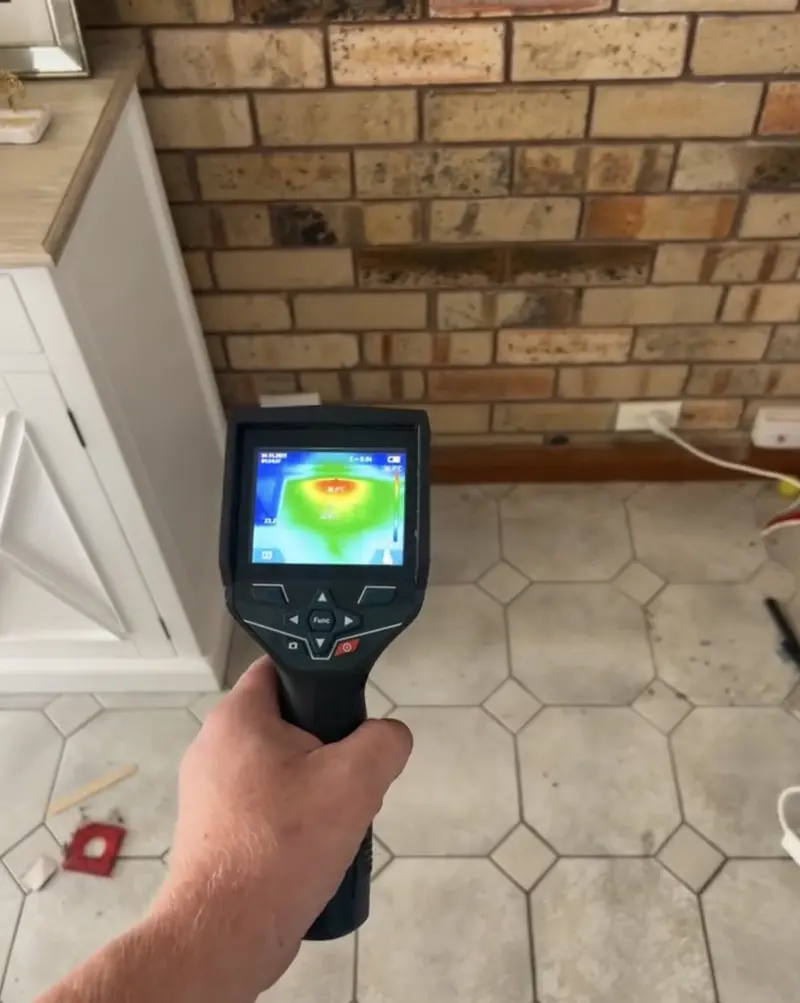
- We scan with a thermal camera. Wet areas often look cooler than dry ones. A hot water leak looks warmer. The picture guides us to the right wall or floor.
- We listen. Contact microphones pick up water noise inside pipes and walls. The sound changes as we get closer.
- We pressure test. We isolate a line and watch for a drop. This tells us which pipe loses water.
- We mark the spot. We mark the wall or floor so the plumber opens one small area.
A thermal camera does not see through walls. It reads surface temperature. The skill lies in reading that picture alongside sound, moisture, and pressure data.
Why this beats opening walls
Contractors sometimes open a wall near the stain and hope. If the leak sits elsewhere, they open another wall. Each hole costs money to patch and paint.
A detection visit costs far less than a second hole. We locate the leak first, then the plumber cuts once. You protect your finishes, your schedule, and your budget. A short comparison helps. Look at the table on our home page for a side-by-side view.
Hidden leaks and mold
Moisture left too long invites mold. Mold can grow on wet drywall within a day or two in the right conditions. If you see black or green spots or smell a musty odor, find the water source before you clean. Cleaning without fixing the leak just resets the clock.
Detection gives you the source. A mold or water damage restoration company can then dry and clean the area. We do not do restoration work. We tell you where the water comes from, so the right trade handles the rest.
When insurance gets involved
Many homeowners ask us for documentation. A written report shows where the leak sat, how we confirmed it, and what we tested. That helps an adjuster understand the cause.
Coverage rules vary. Some policies cover sudden pipe bursts and not slow leaks. Ask your agent about your policy. See what our leak detection report includes.
What to do while you wait
If you see signs of a hidden leak, take these steps:
- Check your meter. Read it, wait two hours with no water use, and read it again. The EPA says a change probably means a leak.
- Shut off the main valve if water is actively spreading.
- Take photos of stains, warping, and damp spots. Add dates.
- Move belongings away from wet areas.
- Turn off the circuit to any outlet or fixture near standing water if you can do so safely. If you cannot, call an electrician.
- Do not cut drywall until you know where the pipe runs.
Common questions
Can you find a leak behind a tile wall?
Often yes. Moisture readings, a thermal camera, and listening gear work through tile in many cases. The result depends on the wall and the leak.
Will you need to cut into my drywall?
We try not to. Detection happens from the surface. If a repair needs an opening, we mark one small area so the plumber cuts only there.
How long does a visit take?
Most visits last a few hours. A simple leak may take less. A large house or a faint leak can take longer.
Can you tell me where the leak starts if it travels?
Yes, in most cases. Water often travels along pipes or framing. We trace it back by testing each line and reading moisture and sound.
What if you cannot find the leak?
We tell you. Some leaks sit too deep or too small to hear. We explain what we tested, what we ruled out, and what to try next. Our guide on when a plumber could not find the leak covers common reasons.
Book hidden leak detection in Greeley
If you see stains, smell damp, or watch your meter run, call Leak Detector Greeley. We trace the leak, mark it, and give you a written report. Hidden water leak detection in Greeley, CO should leave your walls and floors intact until you know the exact spot.