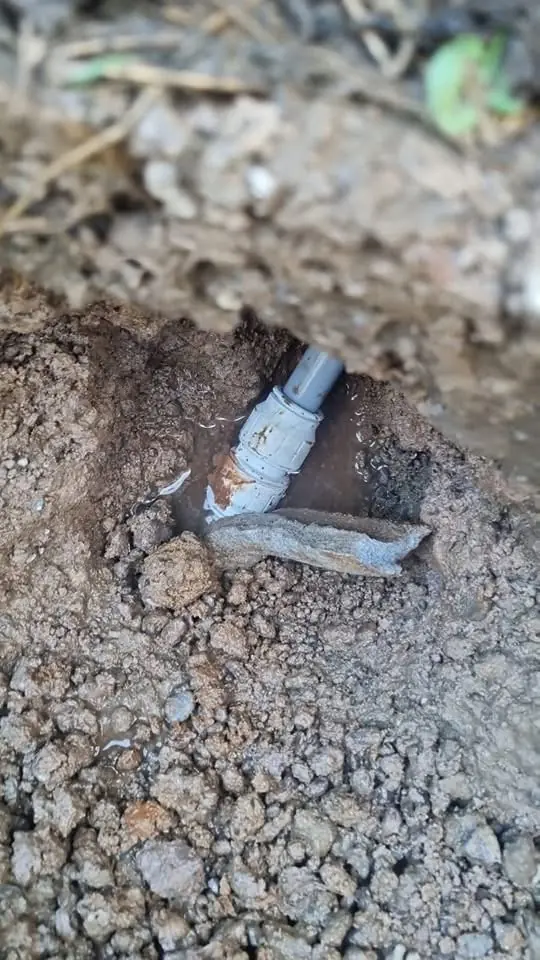
Your water service line runs underground from the city main or your meter to your house. It carries every gallon your family uses. When it leaks, the water disappears into the soil, and nothing shows until the damage is large. Water line leak detection in Greeley, CO finds the break without trenching your whole yard.
This page explains what a service line is, how it fails, and how we locate the leak. It also covers who owns which part of the line, which confuses many Greeley homeowners.
What the water service line is
The line has two main parts. The city owns the main under the street and the meter. You own the pipe that runs from the meter to your home. In most cases a leak after the meter is your responsibility, and it shows up as your water use.
The line enters your house through a wall or the floor. Inside, a main shutoff valve lets you stop the flow. Knowing where that valve sits can save you thousands of dollars in a break. Check it today.
If you are unsure where your responsibility ends, call Greeley Water and Sewer at 970-350-9811. They can tell you what the city covers.
Signs your water line is leaking
Underground leaks are quiet. Look for these clues:
- A wet or soft spot in the yard. The grass may stay green and lush in one patch during a dry week.
- A sink hole or sunken ground. Escaping water can wash out the soil beneath turf or a sidewalk.
- Low water pressure. Taps and showers run weak all through the house.
- A moving meter with every tap off. This is the strongest sign. Learn the steps on our water meter leak test page.
- Water in the meter box. A box full of water may point to a leak at the meter or just beyond it.
- A bill that climbs for no clear reason. See our high water bill guide.
- The sound of hissing near the entry point. Stand where the line enters the house and listen.
- Dirty or cloudy water. A break can let soil and debris into the line.
Why service lines fail
Pipes under Greeley yards face real stress. Frozen ground, shifting clay, tree roots, and age all take a toll.
- Soil movement. Many Front Range soils swell and shrink. The Colorado Geological Survey documents swelling soils along the Front Range. A pipe that sits in moving soil can bend and crack at a joint.
- Frost. Lines sit below the frost line, but shallow sections near the house or a meter pit can freeze. Hard freezes can crack fittings that leak after the thaw.
- Old materials. Galvanized steel rusts from the inside. Copper can pit. Older plastics can turn brittle.
- Tree roots. Roots search for water and can squeeze or pierce a line.
- Excavation damage. A shovel, a trencher, or a fence post can nick a line. The leak may start slowly.
- Poor fittings. A single bad coupling can leak for years before anyone notices.
How we find a water line leak
We combine meter data, sound, and pressure tests. Each step shrinks the search area.
- We check your meter. We confirm that the meter moves when your fixtures are off.
- We close your main valve. If the meter stops, the leak sits inside the house. If it keeps moving, the leak sits between the meter and the valve. This one step saves hours.
- We trace the line. We find the route of the pipe so we know where it runs. Not every yard has a map.
- We listen along the line. Ground microphones and contact sensors pick up the sound of a leak. The sound peaks near the break.
- We narrow the zone. We move the sensor in small steps and compare the sound at each point.
- We confirm and mark. We paint or flag the ground at the most likely spot.
For plastic pipe, we may need extra steps because plastic carries sound poorly. Our goal stays the same. We want one confident spot.
Call 811 before anyone digs
Do not dig until crews mark the lines. Colorado law asks you to request a locate before you dig. You can submit a request online or call 811. The utilities respond within two business days, according to Colorado 811.
Here is the catch. Public utility locates do not mark private lines on your property. Your own service line may not show up. That is one reason a leak detection visit helps, because we trace and mark the private line for the plumber.
What happens after we find it
A water line repair usually needs digging. A licensed plumber or excavation crew handles that work. Because we mark the leak first, they can dig a short trench at the right spot.
Typical repair choices include:
- Spot repair. The crew cuts out the damaged section and splices in a new piece.
- Line replacement. If the pipe is old or fails in many places, replacing the whole run may cost less over time.
- Trenchless methods. Crews can replace some lines with minimal digging. Ask any contractor if this fits your yard.
Ask for a written quote, and ask who will restore the lawn, patio, or driveway.
What water line leak detection costs
Prices depend on how long the line runs, how deep it sits, and what pipe material you have. Market sources put leak detection visits in the low hundreds of dollars for most homes. The repair, especially with digging, costs more. You can read our cost breakdown for ranges and sources.
Water line or irrigation line?
Many Greeley yards have an irrigation line that branches off the main supply. A sprinkler leak can look like a service line leak, and the reverse is true too. We test both. If your sprinklers recently ran, read our page on irrigation leak detection. Is the wet spot near a spigot or yard hydrant? See our guide to yard hydrant and hose bib leaks.
Common questions
Do you need to dig to find the leak?
No. We find it from the surface with sound and pressure tests. Digging only happens at the repair, and only at the marked spot.
Who pays for a leak on the service line?
You typically pay for the line between the meter and your home. Ask Greeley Water and Sewer to confirm where the city line ends and yours begins.
Can I fix it myself?
You can, but a break in a pressurized line is not a casual job. Colorado requires plumbing work to follow code, and many repairs need a licensed plumber or a permit. Call 811 before any digging.
Will the leak show up in my yard?
Not always. In sandy or dry soil, water may sink straight down. In clay, it may pool. Either way, your meter tells the truth.
How fast should I act?
Fast. A steady leak wastes water every hour and can undermine soil, slabs, and sidewalks. If your meter runs with everything off, call us.
Get water line leak detection in Greeley
If you suspect a break between your meter and your home, call Leak Detector Greeley. We find the line, find the leak, and mark it. Then a licensed plumber fixes it in one place. Water line leak detection in Greeley, CO should end with one clear mark and a written report.