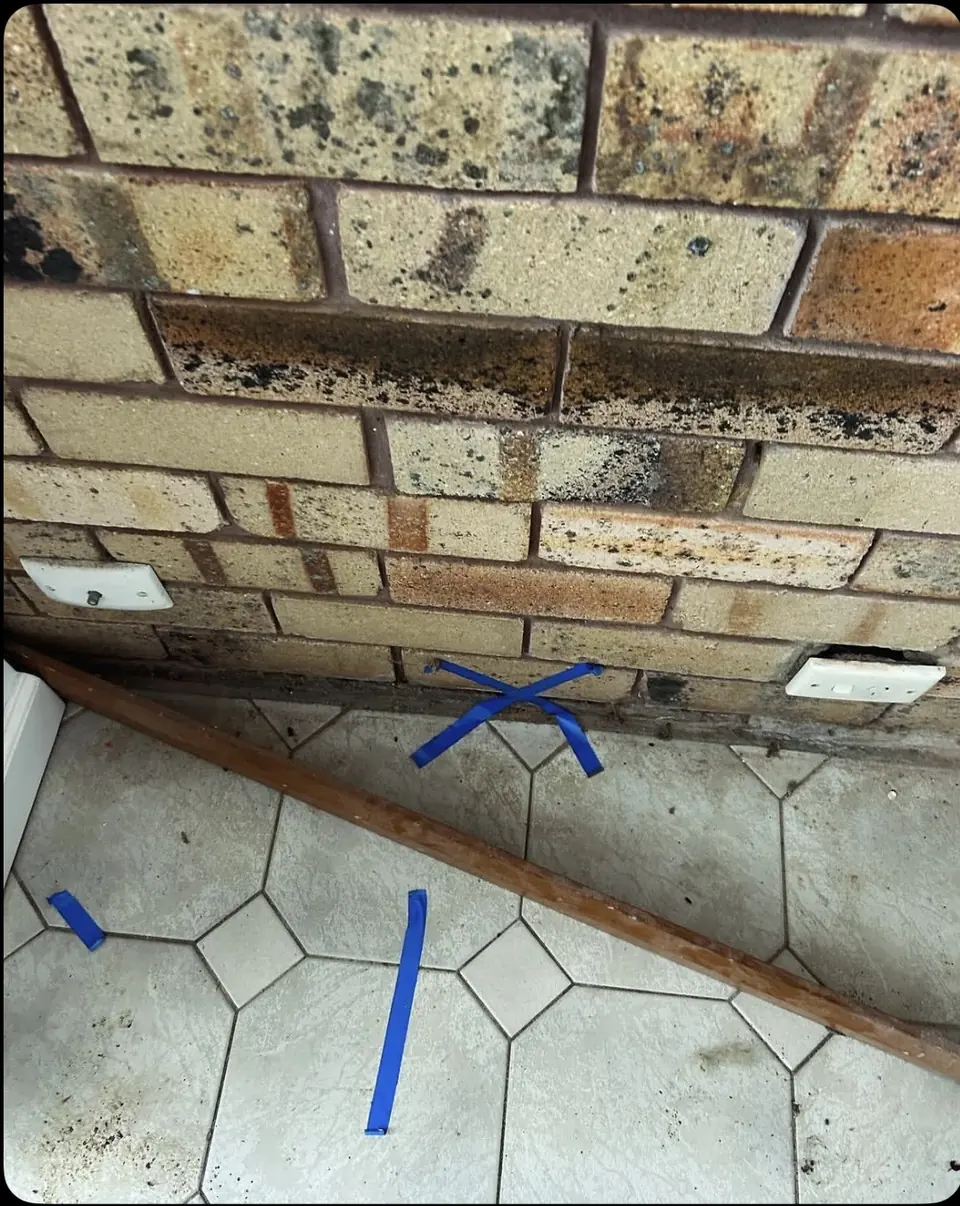
A damp basement wall, a crumbling stairwell, or a wet crawlspace leaves you with a hard question. Does the water come from a pipe, or does it seep in from the ground? The answer changes who you call and what you spend. A plumber fixes a pipe. A drainage or foundation contractor fixes groundwater. Guess wrong and you pay for the wrong repair.
This guide shows how to tell a plumbing leak from groundwater in a Greeley home. Most of the clues are free and take a few minutes.
Why the question matters
People often get this wrong. One homeowner described a wall that kept crumbling near a basement stair. Plumbers suggested a sump pump after a flood, yet the season had been dry. Nobody tested for a plumbing leak first. The house had an unexplained moisture problem, and the cause stayed unclear.
A moisture problem has three common sources:
- A pressurized supply line that leaks all day.
- A drain or sewer line that leaks when you use water.
- Groundwater or surface water that enters from outside.
Each source has its own clues. Sort them in order, and you can narrow the cause fast.
The meter test: your first and best clue
Start here. If your meter moves with every fixture off, a pressurized line leaks. Groundwater cannot move your meter.
- Turn off every tap, the ice maker, the washer, and the sprinklers.
- Check the low-flow dial on your meter for 15 minutes.
- Note whether it moves.
Our water meter leak test walks through each step. The result splits the problem in two:
- Meter moves: Treat it as a plumbing leak first.
- Meter holds still: A supply leak is unlikely. Look at drain lines, grading, and groundwater.
A still meter does not rule out a drain line leak. Drain lines leak only when water runs through them. We cover that below.
Clues that point to a plumbing leak
Plumbing leaks follow patterns:
- The dampness never stops. It stays the same in dry and wet weather.
- A warm spot. A hot water line warms the surface above it.
- The sound of water. You hear trickling or hissing near the wall.
- Your bill rose. Use goes up without changes in habit.
- Stains near pipes. The wet area follows the path of a supply line.
- A water heater, sink, or bathroom sits nearby. Many leaks start there.
If you see these signs, read our page on hidden leak detection. For leaks under concrete floors, see slab leak detection.
Clues that point to groundwater
Groundwater and surface water follow weather and season.
- It gets worse after rain or snowmelt. The wall dries out during dry spells.
- It shows up low. Water enters at the floor-wall joint or in the lower third of the wall.
- It appears along an outside wall. Water comes from the soil side.
- White, chalky crust appears. This crust, called efflorescence, forms when water carries salts through concrete or brick and leaves them behind.
- It follows irrigation. The wall gets damp after you run sprinklers near that side.
- Window wells fill with water. Poor drainage lets water press against the foundation.
- Gutters dump near the house. Downspouts that empty at the foundation soak the soil.
- The soil slopes toward the house. Water runs toward the foundation instead of away.
Note that irrigation counts as surface water. A sprinkler head aimed at a foundation can create dampness all summer. It acts like groundwater, but you can control it.
Why Greeley soil complicates things
Many Front Range soils contain clay. The Colorado Geological Survey documents swelling soil and rock along the Front Range Urban Corridor. Clay swells when wet and shrinks when dry.
Two effects follow:
- Clay holds water against the foundation. It drains slowly. After a heavy rain or a long irrigation, it stays wet.
- Clay moves. It can shift slabs, walls, and buried pipes. Movement can cause cracks that let water in. It can also crack pipes and cause a plumbing leak.
So a damp wall in Greeley can have two causes at once. Soil movement can crack a pipe, and the same soil can hold groundwater against the wall. A detection visit helps you sort them out.
Greeley also sits near irrigation ditches and farmland. Water in nearby ditches and fields can influence groundwater in some areas. We cannot say if that affects your home. We can say whether your pipes leak.
A drain or sewer line leak
Drain lines act differently from supply lines. They carry water only when you use a fixture. A leaking drain wets the ground or the wall after you run a sink, tub, or washer. A drain leak does not move your meter. The water has already passed through the meter before it drains.
Clues for a drain leak:
- Dampness appears after you shower or run the washer.
- You smell sewer gas.
- Soil is wet near the sewer line path.
- The floor drain backs up or gurgles.
If you suspect a drain leak, tell your plumber. A camera inspection can show the inside of the line. We can also help narrow where water travels.
A simple weekend test plan
You can gather clues over a few days. Follow this plan:
- Run the meter test. Note the result.
- Mark the wet area. Use a pencil or tape to outline the edge of the damp spot. Add the date.
- Check the spot daily. See if it grows, shrinks, or stays the same.
- Note the weather. Write down rain, snow, and sprinkler runs.
- Run a fixture. Run the nearest sink or tub for a few minutes and check the wall.
- Walk the outside. Check grading, downspouts, window wells, and sprinkler heads on the wet side.
- Take photos. Add dates.
Patterns appear. A spot that grows after a storm points to water from outside. A spot that grows steadily points to a pipe.
What each answer means for repair
If it is a plumbing leak
You need a leak detection visit, then a licensed plumber. We find the leak and mark it. A plumber repairs it at the marked spot.
If it is groundwater
You need drainage and grading fixes. Typical steps include moving downspouts away from the house, adjusting soil slope, fixing window wells, and adjusting sprinklers. Some homes need a drain system or a sump pump. A drainage or foundation contractor handles that work.
If it is both
Fix the plumbing leak first. It adds water and moves soil. Then address drainage. Fixing only one may leave the problem in place.
Be careful with big repairs
Do not agree to a sump pump or a major drain system before you test for a plumbing leak. A sump pump manages groundwater. It does not stop a broken supply line. If a pipe leaks, water keeps coming.
Ask any contractor how they ruled out plumbing. A good answer mentions the meter test, a pressure test, or a leak detection visit. If they skip that step, ask why.
When to call us
Call Leak Detector Greeley when:
- The meter moves with everything off.
- The damp spot does not follow weather.
- You hear water in the wall or floor.
- You cannot tell the cause after the weekend test.
- A plumber or contractor could not find the cause. See our guide to when a plumber could not find the leak.
We test the plumbing, mark any leak, and write up the result. If the plumbing passes, you know to focus on drainage. That saves you from an expensive wrong repair. If you live in an older home, our page on Central Greeley covers common issues in older neighborhoods.
Common questions
Can groundwater make my water meter move?
No. Groundwater does not pass through your meter. Only a plumbing leak or water use moves it.
What is the white crust on my basement wall?
It is likely efflorescence. Water moves through concrete or brick, carries salts, and leaves them as it dries. It shows that moisture moves through the wall. It does not tell you the source.
Can a leak cause my wall to crumble?
Yes. Constant moisture weakens mortar, drywall, and plaster. Over time, materials crumble. The source can be a leak or groundwater.
Do sprinklers cause basement dampness?
They can. Sprinkler heads aimed at the foundation add water to the soil beside the wall. Adjust them to spray away from the house.
Should I get a sump pump?
Only after you rule out a plumbing leak and confirm that groundwater is the cause. Ask a drainage contractor to explain why a pump fits your home.
Sort out the source before you spend
A damp wall can come from a pipe or from the ground. The meter test, the weather pattern, and the location tell you a lot. If you still cannot tell, call Leak Detector Greeley. We test the plumbing, give you a clear answer, and save you from fixing the wrong problem.